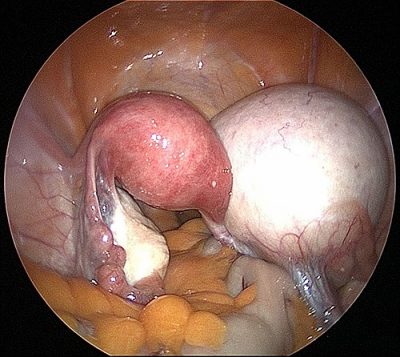
An ovarian cyst is a fluid-filled sac in the ovaries that can vary in size. Having a cyst is normal, but the growth of a cyst can lead to complications, according to Dr. Matthew Boente MD. Most often these cysts are harmless. However, they can become problematic if the bleed internally, get too big (>5-7cm depending on the patients age). Finally, most ovarian cancers have a cystic component as well as a solid component. The first type of functional ovarian cyst is the follicle cyst. A woman produces an egg in a sac called follicle which is located on the surface of the ovaries. After the egg develops, the follicle spontaneously ruptures and releases the egg. A follicular cyst is formed when the follicle doesn’t break or the fluid inside the follicle forms a cyst.

A dermoid cyst is a growth in the ovaries which can contain hair, skin fat, and other tissues and can continue to grow inside the womb. And, as the cyst grows, a woman could experience symptoms including abdominal bloating or swelling in the lower abdomen. Again, if they get large or painful they can require surgery. Only 1% are cancerous.
Dr. Matthew Boente MD states that if a cyst grows big enough, it can cause certain complications even if the growth itself isn’t cancerous. For example, ovarian torsion can occur when a large-enough cyst causes an ovary to twist therefore cutting off its own blood supply. This can cause a complete loss of ovarian function and necessitate its removal. Likewise, a ruptured cyst can be life-threatening as it can increase the risk of getting a serious infection when left untreated.
Ovarian cancer expert Dr. Matthew Boente MD has served in the National Comprehensive Cancer Center-(NCCN) Cervix and endometrial cancer screening task force for two years. To know more about Dr. Boente and his practice, visit this page.


 Dr Matthew Boente MD